Executive Summary
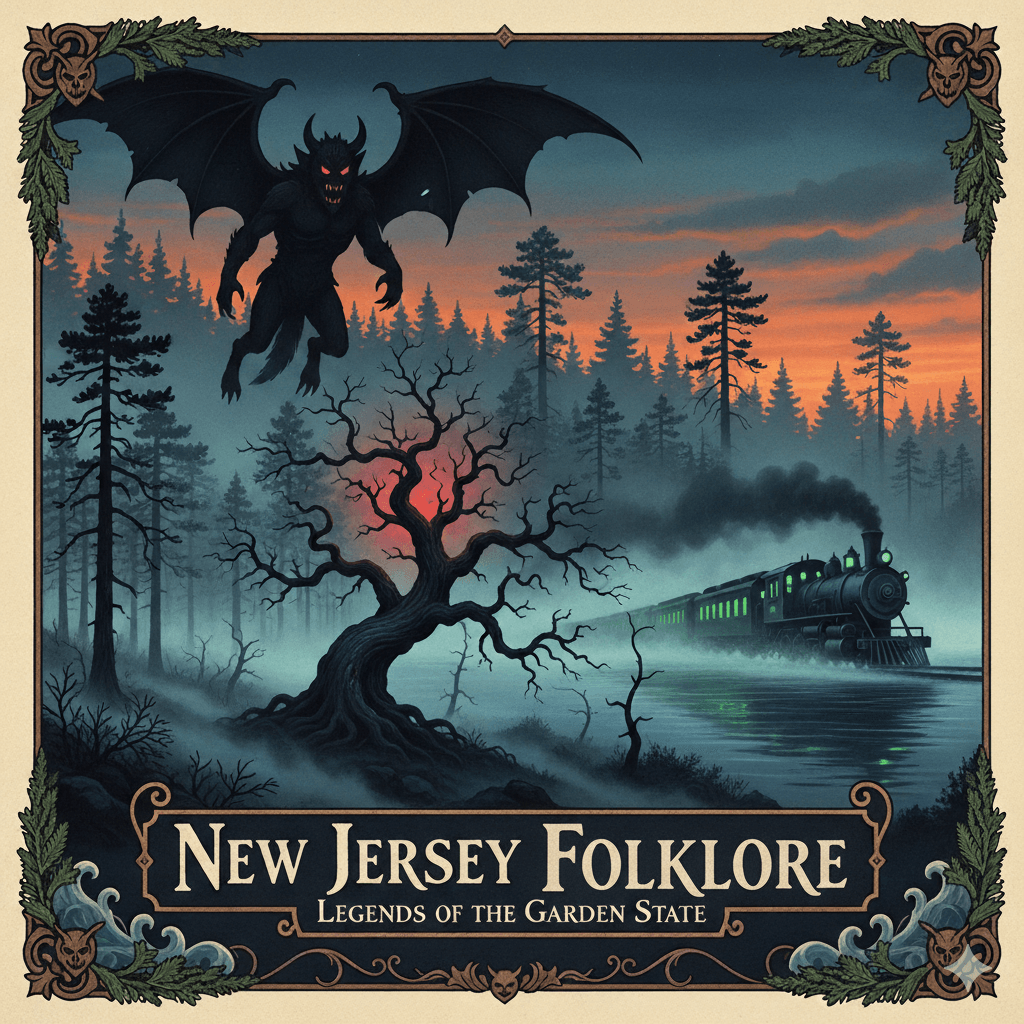
New Jersey Folklore is as varied as its geography—pine-scented wilderness, industrial riverfronts, and glittering lakes—producing legends that are both strange and revealing. The state’s best-known creature, the Jersey Devil, stalks the Pine Barrens in stories dating to the colonial era and erupted into national headlines during a wave of sightings in 1909. Farther north, Lake Hopatcong has its own serpentine celebrity, “Hoppie,” while Harmony Township whispers of “spook rabbits” that turn the tables on hunters. In suburban Basking Ridge, a gnarled oak known as the Devil’s Tree carries tales of curses, racial terror, and community reckoning. And in Newark, a phantom locomotive is said to thunder through history at midnight. Read together, these tales are not just scary stories; they are mirrors of community identity, cultural conflict, and the power of place.
Key Findings
- The Jersey Devil blends colonial-era family feuds, religious tension, and the anxieties of a vast wilderness; its modern fame owes much to a heavily publicized 1909 “mass sighting” and ongoing cultural branding.
- “Hoppie,” the Lake Hopatcong sea serpent, entered local lore in the 1890s and continues as a playful, tourism-friendly counterpart to global lake-monster myths.
- Harmony Township’s “spook rabbits” exemplify folklore born from competitive hunting culture, dense cover, and tall-tale traditions—without specimen-based proof.
- The Devil’s Tree in Basking Ridge fuses curse narratives with remembered histories of racial terror; municipal protection and signage acknowledge both vandalism and commemoration.
- Newark’s ghost train story belongs to a wider North American and European motif linking industrial progress with loss, danger, and the uncanny.
Why Folklore Thrives in the Garden State
Folklore flourishes where landscapes are distinctive and histories are layered. New Jersey’s Pine Barrens—a sprawling, sandy forest once viewed by outsiders as eerie and isolating—proved fertile ground for legends that personify the unknown. Urban and industrial corridors, meanwhile, generated their own metaphors: phantom trains that capture the thrill and peril of early rail. Around lakes and small towns, communal identity, seasonal tourism, and the rhythm of local newspapers helped cement stories that feel both intimate and enduring. Media—19th-century broadsheets and 20th-century tabloids as much as today’s websites—have kept these tales in circulation, adapting them to modern sensibilities while preserving their core mysteries.
The Jersey Devil of the Pine Barrens
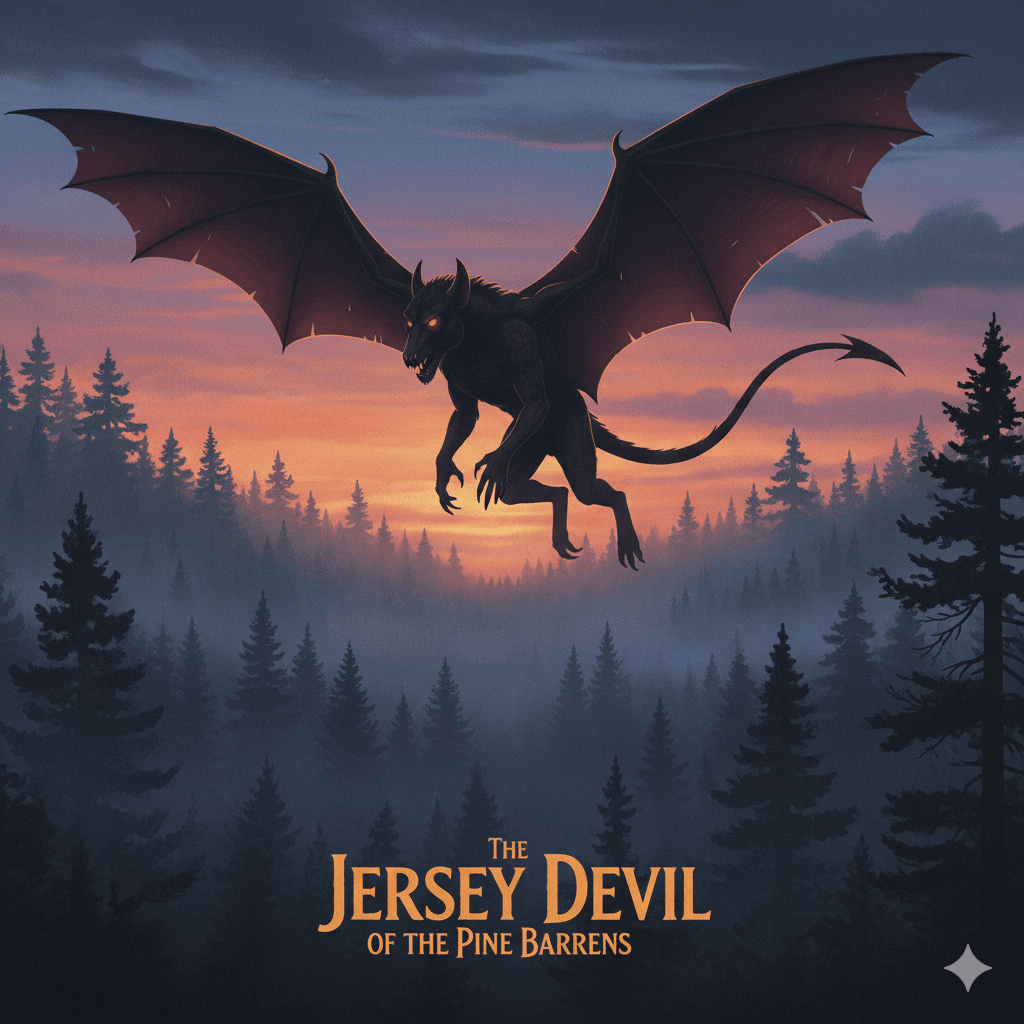
Few American cryptids are as recognizable as the Jersey Devil, also known historically as the Leeds Devil. Descriptions vary, but a familiar composite includes bat-like wings, a goat or horse-like head, cloven hooves, and a forked tail. The most cited origin story dates to 1735, when a woman known as Mother Leeds—pregnant with her thirteenth child—supposedly cursed the baby, which transformed into a winged creature and fled into the pines.
Behind the drama lies real colonial context. The Leeds family, including printer Daniel Leeds and almanac-maker Titan Leeds, stood out in an era when Quaker communities and Enlightenment ideas often clashed with superstition. Historians note that the “Leeds Devil” label likely emerged from political, religious, and publishing rivalries, then fused with anxieties about the vast, poorly understood Pine Barrens. The legend went national in January 1909, when newspapers across the Mid-Atlantic ran lurid accounts of tracks, attacks, and sightings. That week-long media frenzy vaulted the creature into permanent statewide fame, a status later enshrined when New Jersey’s NHL franchise chose “Devils” as its name.
Today the Jersey Devil is both a cultural icon and a case study in how folklore grows. The Pinelands Preservation Alliance and the New Jersey Council for the Humanities trace its evolution from colonial slander to tourist magnet, a testament to how narrative and place can intertwine for centuries.
“Hoppie,” the Lake Hopatcong Sea Serpent

In the summer of 1894, a fisherman on Lake Hopatcong reported a long, undulating creature with a dog-like head—soon dubbed “Hoppie.” Most versions fix its length around forty feet, describing it as a serpentine form rolling just beneath the surface. No photographs, no bones, no conclusive evidence—just recurring anecdotes, occasional playful hoaxes, and a steady stream of retellings in regional newspapers and radio.
Hoppie matters less as zoology than as community story. Like Scotland’s Nessie, the Lake Hopatcong serpent has become a friendly ambassador for a waterside destination. Local histories and feature pieces continue to spotlight the legend, an affirmation that folklore can be a form of hometown branding. Even skeptics—who point to waves, logs, and human imagination—recognize that the monster connects residents and visitors to the lake’s past.
The Spook Rabbits of Harmony Township
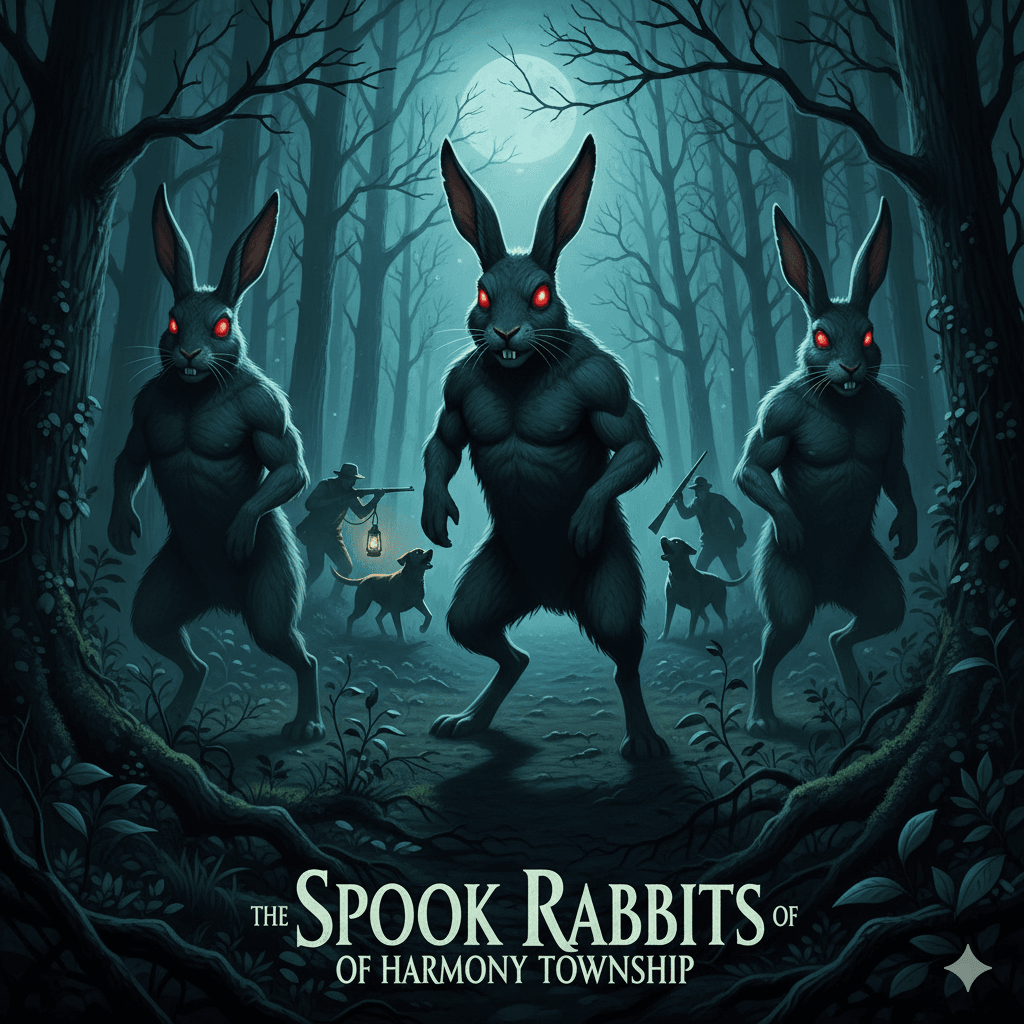
If sea serpents and winged devils feel outsized, Harmony Township’s “spook rabbits” are folklore turned inward: ordinary animals rendered uncanny by circumstance. An 1891 hunting column told of mutant or unusually aggressive cottontails that attacked dogs in revenge for slain companions. Shooters allegedly fired repeatedly, to no effect—then blamed dense undergrowth for the rabbits’ miraculous escapes.
To folklorists, this reads like a classic hunter’s tall tale. The quarry is scarce or elusive, the cover is thick, and the storyteller guards both pride and territory. The twist—that small prey becomes a predator—adds humor and menace. Notably, there are no specimens or verified records, just yarns spun in print and passed along in conversation. Weird NJ and other chroniclers preserve the story less as biological claim than as a window into rural rivalry and the creative bravado of sportsmen’s culture.
The Devil’s Tree of Basking Ridge
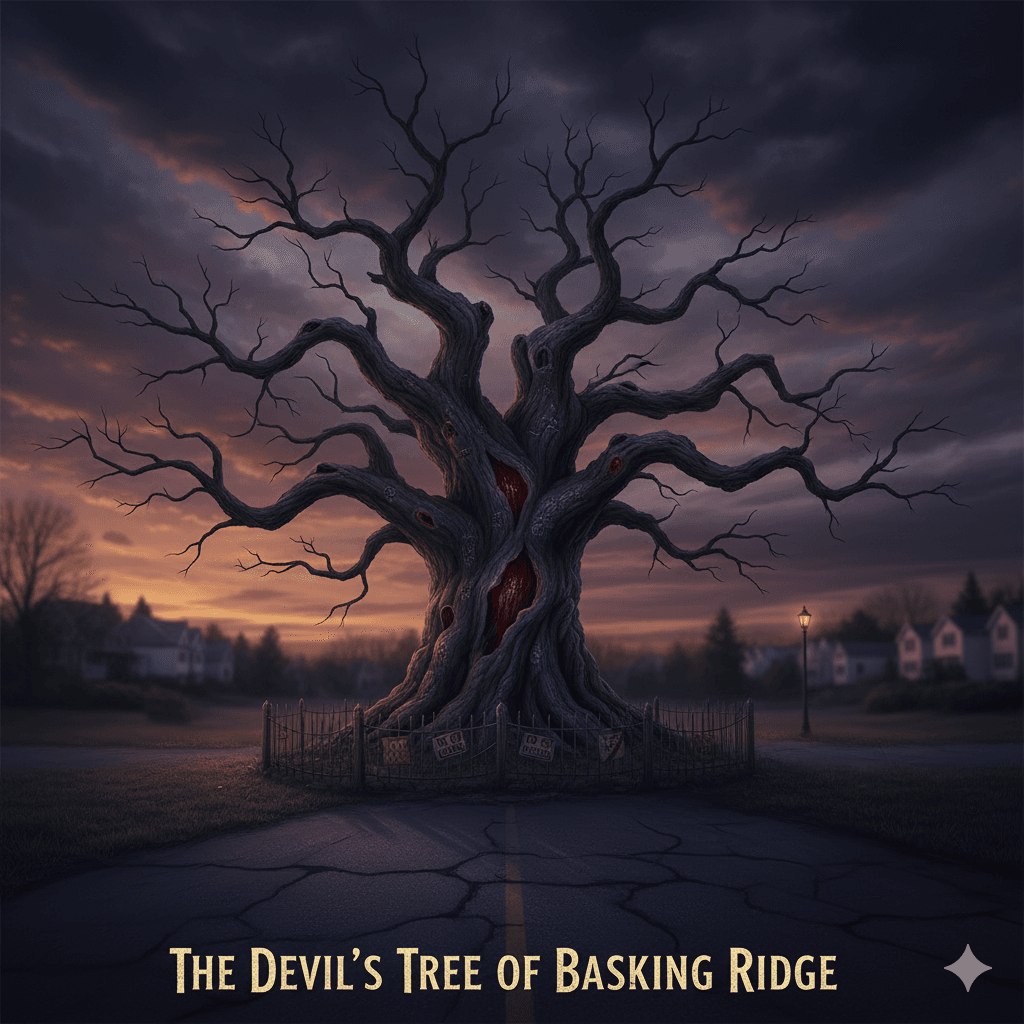
On a quiet roadside in Basking Ridge stands a weathered oak said to harbor a curse. Visitors whisper about failed car ignitions, sudden chills, and the tree’s ominous “vortex of evil energy.” More serious are stories linking the site to lynchings and Ku Klux Klan activity—a contested but persistent narrative that connects a physical landmark to the state’s painful racial history.
While specific claims of Klan executions at the tree are difficult to document, the lore functions as a form of community memory, acknowledging that racial terror was not confined to the Deep South. The tension between thrill-seeking and remembrance is palpable: people carve the bark or dare each other to touch it, while others argue for respect and context. Local authorities have installed barriers and signage to deter vandalism and protect the site, a civic response that tacitly recognizes both the tree’s cultural power and its vulnerability.
Sources such as Atlas Obscura, the Mr. Local History Project, and local government notices trace how the Devil’s Tree has become a contested memorial—part haunted attraction, part reckoning with the past.
Newark’s Phantom Train

Late-19th-century Newark had its own midnight spectacle: crowds reportedly gathered near Broad Street Station to watch a ghost train hurtle by, driven by a deceased engineer on his final run. The tale is typically dated to 1868 in retellings, though contemporary documentation is thin. In folklore terms, the story sits comfortably within a widespread North American and European motif. Ghost trains often appear where railways transformed landscapes and lives—icons of speed, modernity, and risk. They mark tragedies remembered and imagined, standing in for the costs of progress during a period when steel and steam redefined the state.
Reading the Legends: What They Reveal About New Jersey
Taken together, these stories map the emotional and historical contours of New Jersey. The Jersey Devil channels the fears and freedoms of a wilderness at the edge of settlement, while Hoppie turns a recreational lake into a stage for collective imagination. Spook rabbits poke fun at human bravado, and the Devil’s Tree forces a conversation about memory, race, and the ethics of dark tourism. Newark’s ghost train, finally, captures the awe and unease of industrialization, an era when machines accelerated life and death alike.
These legends endure because they do cultural work. They brand towns, anchor festivals and sports teams, and bring visitors off highways and into local businesses. They also invite critical thinking: how newspapers amplify a rumor into reality; how communities negotiate painful histories; how a state with so many identities finds unity in shared stories.
Planning Your Own Folklore Road Trip (Responsibly)
If you go looking for New Jersey’s legends, treat them—and their settings—with care. The Pine Barrens are ecologically fragile; stick to marked trails and leave no trace. Lake Hopatcong and Harmony Township are living communities, not just backdrops for tales. The Devil’s Tree is protected; obey posted rules, do not damage bark or barriers, and respect the site’s gravity. Urban folklore sites like Newark’s rail corridors are often active infrastructure—observe from safe, legal vantage points. The best souvenirs are photos, notes, and conversations with locals who keep these stories alive.
SEO Title and Meta Description
- Suggested SEO Title: New Jersey Folklore: Jersey Devil, Lake Hopatcong’s Hoppie, Devil’s Tree, Ghost Trains and More
- Suggested Meta Description: Explore New Jersey folklore—from the Jersey Devil in the Pine Barrens and Lake Hopatcong’s “Hoppie” to Harmony Township’s spook rabbits, the cursed Devil’s Tree, and Newark’s ghost train. History, context, and travel tips inside.
Sources and Further Reading
- Pinelands Preservation Alliance: The Jersey Devil and Folklore — https://pinelandsalliance.org/learn-about-the-pinelands/pinelands-history-and-culture/the-jersey-devil-and-folklore/
- Weird NJ: The Jersey Devil — https://weirdnj.com/stories/jersey-devil/
- NorthJersey.com: The sea serpent of Lake Hopatcong — https://www.northjersey.com/story/entertainment/2018/10/29/stranger-jersey-sea-serpent-lake-hopatcong-nj/1805341002/
- WOBM: The story of “Hoppie” — https://wobm.com/do-you-know-the-story-of-the-jersey-hoppie-monster-in-lake-hopatcong/
- NJ.com: Creepy New Jersey (spook rabbits) — https://www.nj.com/entertainment/2012/04/creepy_new_jersey_the_stuff_of.html
- Atlas Obscura: The Devil’s Tree — https://www.atlasobscura.com/places/devils-tree
- Mr. Local History Project: KKK in Basking Ridge context — https://mrlocalhistory.org/kkk-basking-ridge/
- US Ghost Adventures: The Devil’s Tree overview — https://usghostadventures.com/haunted-stories/the-devils-tree-of-new-jersey/
By weaving evidence from historical press, local histories, and cultural organizations, this guide balances wonder with context. Whether you believe in winged creatures and phantom locomotives or simply in the power of a good story, New Jersey’s legends offer a memorable tour through the state’s landscapes—and its imagination.